
Most agencies stop measuring where things get difficult. We do the opposite.
Our philosophy is simple: if it affects the business, we find a way to measure it. Even if it’s messy. Even if it’s upstream. Even if it’s the kind of thing people usually throw into the “brand awareness” bucket and call it a day.
Because the truth is, you can’t optimize what you can’t measure - and vague guesses don’t drive growth.
1. We Design Experiments That Connect Marketing to Business Outcomes
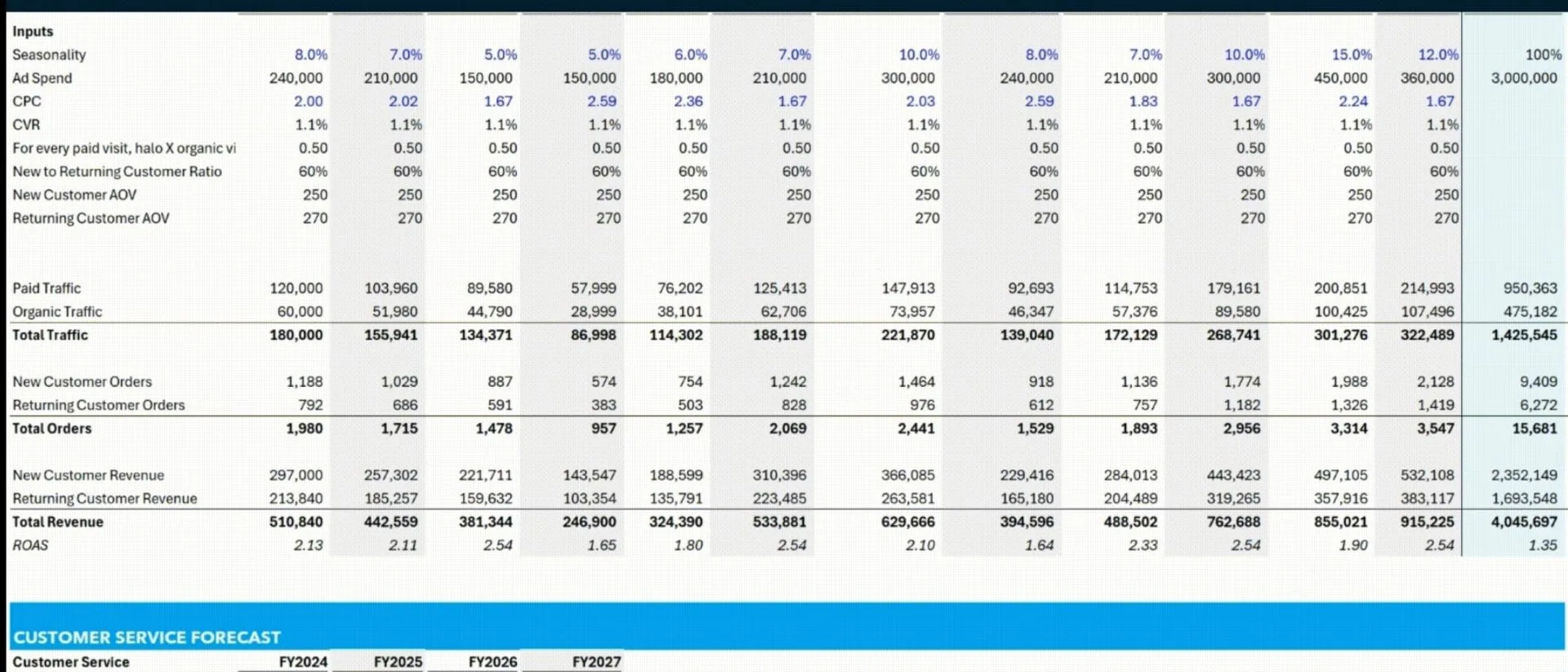
We don’t rely on gut feel or vanity metrics. We set up structured experiments and use statistical models - including tools like multiple regression analysis - to isolate the real-world impact of what we do.
That means we can tell you how a top-of-funnel brand campaign influenced actual store traffic, sales volume, or lead quality weeks down the line. Not just clicks or views - but downstream business results that move the needle.
This kind of analysis matters because it changes how you allocate budget. Instead of guessing which channels are worth investing in, you’ll know which efforts are driving ROI - and which aren’t.
2. Hard-to-Measure Doesn’t Mean Impossible-to-Measure
Awareness campaigns, influencer programs, display ads - these are often dismissed as "untrackable." But in our view, they’re just harder to measure - not impossible.
We look for signals. We set up control groups. We track behavioral shifts. We build proxy models. And when there’s noise, we filter it out with the right data structure and methodology.
Why does this matter? Because if you're spending on upper funnel activity, but only tracking last-click conversions, you're making blindfolded decisions. And blindfolded marketing is expensive.
3. Clear Goals Make Measurement Matter
Measurement without clarity is just noise.
That’s why we start every engagement by locking in focused, business-aligned goals. Whether that’s lead volume, sales revenue, cost per acquisition, customer retention - or something more nuanced - we make sure we’re measuring what actually matters.
When goals are clear, results are easier to interpret. That’s what lets us move fast, adapt intelligently, and spend wisely.
4. We Go Beyond Last Click
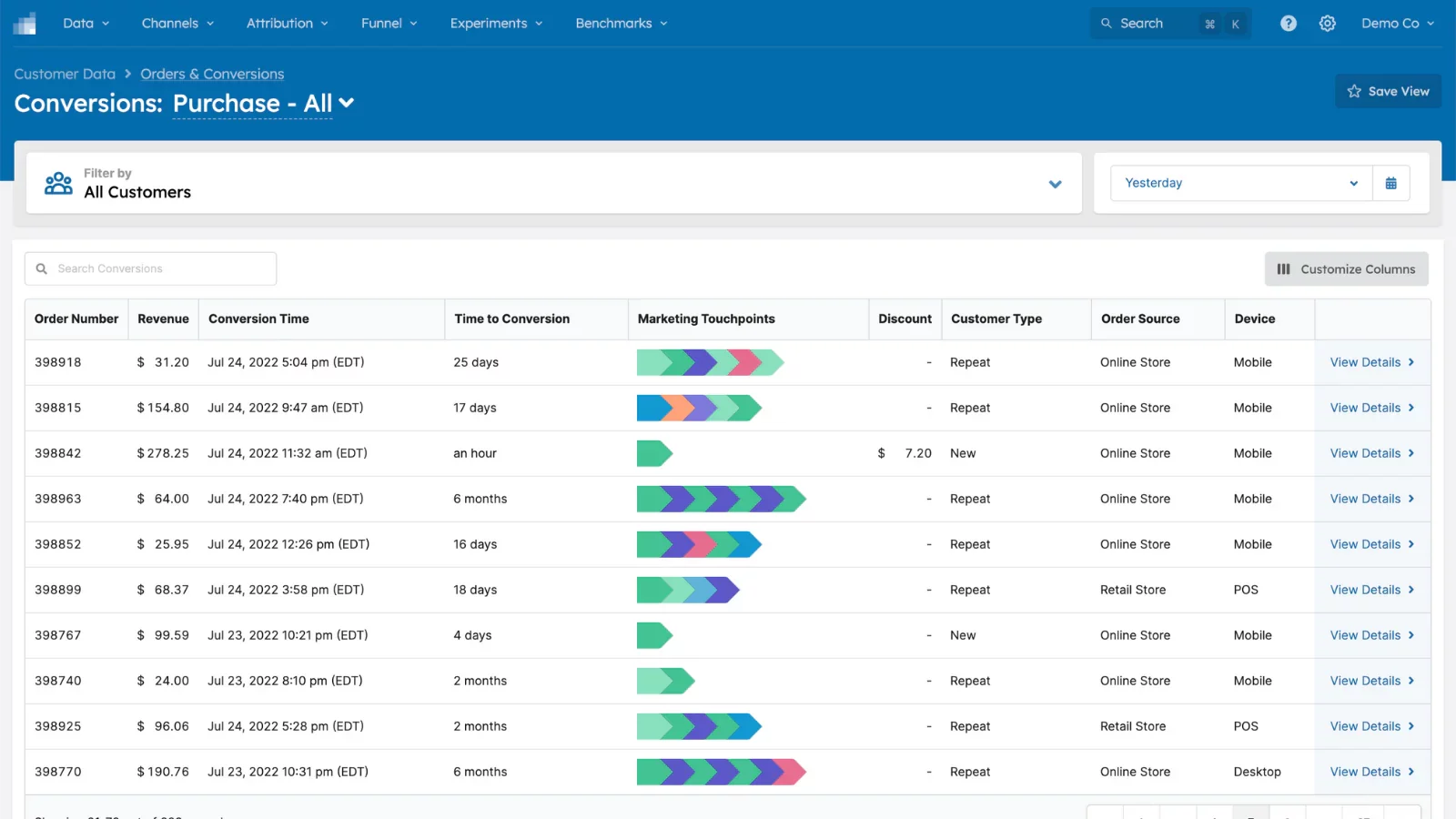
Attribution is complex, and defaulting to last-click hides the real story. We build reporting that accounts for multi-touch, multi-channel customer journeys - because most people don’t convert after a single interaction.
Understanding what influenced a conversion is just as important as understanding what closed it. That insight helps rebalance spend across the funnel, improve forecasting, and uncover hidden ROI.
5. Reporting That Actually Informs Action
Too many reports are just lists of numbers. We build reporting frameworks designed to drive decision-making.
What’s working? Why? What needs to be adjusted? What are we testing next?
Our reporting doesn’t just show what happened. It explains what it means and what to do next - so you’re not just measuring the past, you’re improving the future.
Bottom Line: When You Measure the Right Things, You Make the Right Moves
We don’t measure for the sake of it. We measure so you can grow smarter, spend more effectively, and beat your competitors by out-learning them.
This approach lets you stop guessing and start improving - whether you’re running paid search, building brand equity, or testing a new landing page.
If you’re ready to know what’s really working - and make every part of your marketing more accountable - we’re built for that.