

LinkedIn has evolved from a simple networking site into a powerful engine for B2B revenue growth. But many companies get stuck chasing likes and followers, failing to connect their efforts to measurable pipeline and sales. A successful LinkedIn marketing strategy isn't just about posting content; it's a systematic framework for targeting high-value accounts, nurturing leads, and proving ROI. It requires a disciplined blend of organic thought leadership, precision-targeted paid campaigns, and robust analytics.
This guide breaks down 10 proven strategies that move beyond surface-level engagement to create a scalable, revenue-focused marketing machine. We'll analyze specific tactics, from Account-Based Marketing (ABM) to omnichannel integration, providing a replicable blueprint for your own campaigns. While these examples focus on LinkedIn, it's often helpful to draw inspiration from broader digital successes; for those looking for wider creative ideas, exploring 10 Notable Digital Marketing Campaign Examples can provide valuable insights into what captivates an audience.
Ready to see how your current strategy stacks up? Get a free audit of your marketing or PPC strategy. Contact us today to identify new opportunities and drive real revenue.
Here, we will deconstruct the methods behind top-performing campaigns, covering everything from sophisticated audience segmentation and ad creative best practices to advanced attribution and landing page optimization. You will learn how to:
- Target Precisely: Use tools like Sales Navigator for hyper-focused Account-Based Marketing.
- Generate Leads: Deploy Sponsored Content and Carousel Ads that convert.
- Build Authority: Leverage executive branding and thought leadership to foster trust.
- Maximize Engagement: Implement video content and Live Events effectively.
- Optimize Ad Spend: Use retargeting and advanced bidding strategies to improve ROAS.
Each section provides a deep strategic analysis and actionable takeaways you can apply immediately to build a LinkedIn marketing strategy that delivers tangible business results.
1. LinkedIn Sales Navigator for Account-Based Marketing (ABM)
Account-Based Marketing (ABM) flips the traditional marketing funnel on its head. Instead of casting a wide net, you identify high-value accounts first and then engage key decision-makers within them. This is where a robust LinkedIn marketing strategy integrated with Sales Navigator becomes indispensable. Sales Navigator is LinkedIn's premium sales intelligence platform, designed to help you find the right people and companies with unparalleled precision.
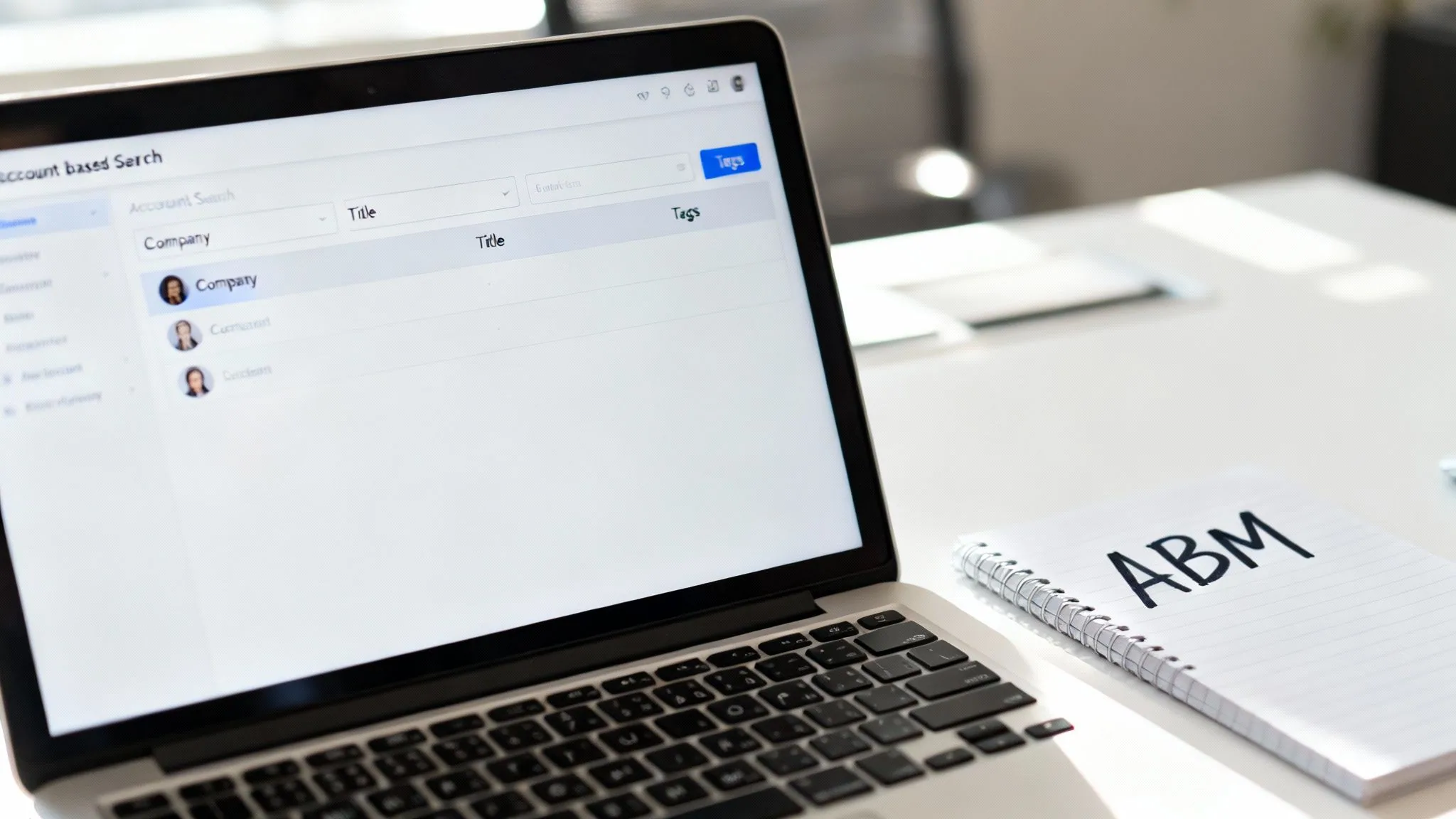
It transforms your ABM efforts from guesswork into a data-driven process. By leveraging its advanced search filters, you can build hyper-targeted account lists based on industry, company size, geography, and even specific technologies used. This precision ensures your marketing budget is spent engaging prospects who are most likely to convert into high-value customers. Integrating these insights is a core component of successful B2B lead generation best practices.
Strategic Breakdown & Actionable Takeaways
Sales Navigator excels at identifying and engaging the entire buying committee within a target account, a critical step for complex enterprise sales.
- Identify Key Decision-Makers: Use the "Lead Recommendations" feature to uncover influential contacts you might have missed. For example, a B2B SaaS company can identify not just the CTO, but also the VP of Engineering and Lead Solutions Architect at a target enterprise.
- Create Dynamic Watchlists: Set up "Saved Searches" for your Ideal Customer Profile (ICP). This creates a dynamic list that automatically updates as new prospects fit your criteria, providing a constant stream of qualified leads. Monitor these lists weekly to stay ahead of personnel changes and opportunities.
- Personalize Your Outreach: Leverage InMail for direct, personalized messages. Mentioning a shared connection, a recent company announcement, or a relevant post they shared can significantly increase open and response rates compared to cold emails.
- Integrate with Your CRM: Connect Sales Navigator with your CRM (like Salesforce or HubSpot) to sync account data, track engagement, and avoid duplicate efforts between sales and marketing teams. This creates a unified view of your entire ABM pipeline.
2. LinkedIn Sponsored Content & Carousel Ads for Lead Generation
Sponsored Content and Carousel Ads are foundational to any effective LinkedIn marketing strategy, appearing natively in the professional news feed to capture attention without being disruptive. Sponsored Content can be a single image, video, or text ad, while Carousel Ads allow you to showcase multiple images or videos in a single, scrollable unit. Both are powerhouses for B2B demand and lead generation.
These ad formats allow for precise targeting based on job title, industry, company size, and specific skills, ensuring your message reaches the most relevant decision-makers. For instance, a SaaS company can use a Carousel Ad to provide a mini product tour, with each card highlighting a different feature and linking to a targeted landing page. This method transforms passive scrolling into an interactive, educational experience that drives qualified leads.
Strategic Breakdown & Actionable Takeaways
The key to success with these formats is combining compelling creative with frictionless conversion paths, such as LinkedIn's native Lead Gen Forms.
- Utilize LinkedIn Lead Gen Forms: Connect these forms directly to your ads to pre-populate a user's profile information (name, company, job title). This drastically reduces friction, streamlines the conversion process, and can significantly increase your lead volume by making it easy for busy professionals to opt-in.
- Test Diverse Ad Formats: Don't rely on a single format. A/B test single image ads against carousel and video ads. For example, a B2B agency could run a single image ad promoting a case study, a carousel ad telling a client success story, and a video ad featuring a client testimonial to see which format generates the lowest cost per lead.
- Target with Precision: Move beyond broad job functions. Instead of targeting "Marketing," narrow your audience to "Director of Demand Generation" or "VP of Marketing" at companies within your ideal customer profile. This ensures your budget is spent on individuals with purchasing power.
- Implement Retargeting Sequences: Create custom audiences of users who engaged with your ad (e.g., watched 50% of your video) but didn't convert. Serve them a follow-up ad with a stronger call-to-action, like an offer for a free consultation or a limited-time demo, to guide them down the funnel.
3. LinkedIn Thought Leadership & Executive Branding
Positioning company executives as industry thought leaders is a powerful, organic component of a comprehensive LinkedIn marketing strategy. This approach moves beyond direct sales pitches to build brand authority, trust, and credibility. By consistently sharing valuable insights, commentary, and company stories through executive profiles, you create a magnetic brand that attracts inbound opportunities and strengthens the impact of your paid advertising efforts with authentic social proof.

This strategy humanizes your brand, connecting with your audience on a personal level that corporate pages often struggle to achieve. When a B2B SaaS founder shares lessons from scaling their company or a healthcare leader demystifies new regulations, they are not just sharing content; they are building a loyal following. This audience is more receptive to future marketing messages because a foundation of trust has already been established, making it a critical layer in any sophisticated B2B marketing plan.
Strategic Breakdown & Actionable Takeaways
An effective thought leadership plan is a managed content process, not a series of random posts. It requires structure and commitment to transform an executive's expertise into a lead-generating asset.
- Develop an Editorial Calendar: Plan content in four-week cycles to ensure consistency. A balanced content mix is crucial: 40% unique insights, 30% company updates and milestones, 20% industry commentary, and 10% engaging with others' content.
- Leverage High-Engagement Formats: Prioritize native LinkedIn content like text-only posts, carousels (PDF documents), and polls over external links. The algorithm favors content that keeps users on the platform, leading to significantly higher organic reach.
- Foster Community Engagement: The goal is dialogue, not a monologue. Aim to respond to all meaningful comments within 24 hours. This interaction signals to the LinkedIn algorithm that your content is valuable, boosting its visibility in the feed.
- Amplify Top-Performing Content: Identify your most engaging organic posts by monitoring likes, comments, and shares. Repurpose these proven winners into carousel or single-image ads to amplify your message to a wider, targeted audience, bridging your organic and paid strategies.
4. LinkedIn Video Content & Live Events for Engagement & Awareness
In a feed dominated by text and static images, video content and live events provide a dynamic way to capture attention and foster deeper engagement. Video is prioritized by LinkedIn's algorithm, reportedly earning 5x more engagement than other content types. This makes a video-centric LinkedIn marketing strategy crucial for building brand awareness, demonstrating thought leadership, and creating genuine connections with your audience.
While short, native videos (under 2 minutes) are perfect for capturing attention in the feed, LinkedIn Live events offer a platform for real-time interaction and community building. This dual approach allows you to deliver both quick, digestible insights and in-depth, interactive experiences. For example, a SaaS company can use a 90-second video to announce a new feature, then host a LinkedIn Live event for a full product demo and Q&A session. This strategy addresses different stages of the buyer's journey, from initial awareness to deeper consideration.
Strategic Breakdown & Actionable Takeaways
Effectively using video and live events requires a plan that optimizes for the platform's unique environment and user behavior.
- Optimize for Silent Viewing: A significant portion of users watch videos without sound. Always include captions to ensure your message is accessible and understood. Use a strong visual hook in the first 3 seconds to stop scrollers in their tracks.
- Post Natively for Maximum Reach: Upload your video files directly to LinkedIn instead of sharing YouTube links. The algorithm heavily favors native content, and embedded YouTube players often see up to 80% less engagement. This simple change can dramatically increase your video's visibility.
- Strategize Live Event Promotion: Schedule LinkedIn Live events during peak business hours (Tues-Thurs, 8-10 am EST is a common sweet spot). Promote the event with 5-7 posts in the week leading up, using both organic and sponsored content to build an audience and drive registrations.
- Repurpose All Live Content: Record every LinkedIn Live session. You can later edit the recording into shorter clips for future posts, create a blog post summarizing the key takeaways, or offer the full video as an on-demand resource for lead generation. This maximizes the value of a single event.
5. LinkedIn Retargeting & Pixel-Based Audience Campaigns
One of the most powerful elements of a modern LinkedIn marketing strategy is the ability to re-engage warm audiences who have already interacted with your brand. LinkedIn's Matched Audiences feature, powered by the Insight Tag, allows you to serve highly relevant ads to website visitors, CRM contacts, and even specific video viewers. This shifts your focus from cold outreach to nurturing prospects who have demonstrated clear interest.
Pixel-based retargeting captures behavioral data from your website, enabling you to build custom audiences based on the specific pages they visited or actions they took. This allows you to create segmented campaigns that speak directly to a user's position in the sales funnel. For instance, you can target users who abandoned a shopping cart or downloaded a whitepaper, significantly improving return on ad spend (ROAS) and lowering your cost per acquisition by focusing on a pre-qualified audience.
Strategic Breakdown & Actionable Takeaways
Effective retargeting goes beyond simply showing the same ad to everyone who visited your site. It requires a segmented, sequential approach that guides prospects toward conversion.
- Install the Insight Tag Correctly: Place the LinkedIn Insight Tag on every page of your website. This is the foundation of all retargeting efforts. Go a step further by setting up conversion tracking for key events like form fills, demo requests, or purchases to measure campaign effectiveness accurately.
- Segment Audiences by Intent: Don't lump all website visitors into one audience. Create distinct segments based on their behavior. For example, a B2B agency could create separate audiences for "Blog Readers," "Pricing Page Visitors," and "Case Study Downloaders," each receiving a different ad creative and offer.
- Develop Sequential Messaging: Guide your audience through the funnel with a multi-step ad sequence. Start by retargeting blog readers with a consideration-stage asset like a webinar or whitepaper. Those who engage can then be retargeted with a conversion-focused ad for a product demo or consultation.
- Use Lookalike Audiences to Scale: Once you have a high-performing retargeting audience of at least 1,000 members, create a Lookalike Audience. LinkedIn will find users with similar professional characteristics, allowing you to expand your reach to a new, highly relevant cold audience that mirrors your best prospects.
6. LinkedIn Partnerships & Sponsored InMail for Direct Engagement
Sponsored InMail (now known as Message Ads) offers a direct and highly personal channel to reach key prospects right within their LinkedIn inbox. Unlike traditional email marketing, these messages bypass spam filters and command higher attention, with LinkedIn reporting open rates often exceeding 50%. This makes it an incredibly powerful tool for a LinkedIn marketing strategy focused on high-value offers, event invitations, and direct conversations with decision-makers.
This method allows you to cut through the noise and deliver a personalized message to a curated audience. For enterprise and mid-market outreach, where getting the attention of a C-suite executive is a major challenge, Sponsored InMail is a game-changer. It’s perfect for scenarios like a management consulting firm inviting VPs to an exclusive roundtable or a healthcare vendor briefing hospital administrators on new compliance standards.
Strategic Breakdown & Actionable Takeaways
The key to Sponsored InMail success is treating it as a conversation starter, not a hard sales pitch. The goal is to provide immediate value and initiate engagement.
- Target High-Value Audiences Only: This tool is most effective and cost-efficient when reserved for senior decision-makers. Use precise targeting to build a small, highly relevant audience based on job titles, seniority, company size, and industry.
- Craft a Compelling Subject Line: Your subject line is crucial for standing out in a crowded inbox. Keep it concise, personalized, and benefit-driven. For example, "Quick question about [Their Company Name]'s strategy" or "Exclusive invite: Executive Roundtable for Tech Leaders."
- Personalize and Be Concise: The message body should be brief, ideally under 150 words. Use LinkedIn profile data like their role, company, or recent activity to personalize the opening. A generic template will be ignored.
- Include a Single, Clear CTA: Don't overwhelm the reader with multiple requests. Focus on one clear action, such as booking a 15-minute call, registering for a private webinar, or downloading an exclusive research report.
- Test and Optimize Send Times: Monitor your campaign performance based on send days and times. While mid-week during business hours (10 AM to 2 PM) is a common best practice, test different windows to find what works best for your specific audience's time zone and habits.
7. LinkedIn Content Marketing & Resource Center Strategy
A powerful LinkedIn marketing strategy moves beyond simple posts and ads; it builds an asset. Creating a content and resource center on your LinkedIn Company Page establishes your brand as a trusted authority. This involves publishing high-value content like whitepapers, case studies, webinars, and in-depth guides that serve as both organic magnets for your target audience and potent fuel for paid campaigns. This strategy turns your page into a destination, not just a billboard.
By housing valuable resources directly on your page, you create multiple entry points for lead capture and nurture prospects throughout their buyer's journey. This approach transforms passive followers into an engaged community that looks to you for industry insights and solutions.
Strategic Breakdown & Actionable Takeaways
An effective content hub systematically addresses audience pain points at every stage of the funnel, from awareness to decision, positioning your brand as the go-to expert.
- Align Content to the Buyer's Journey: Develop a content calendar that maps assets to specific funnel stages. For example, a SaaS company might create a top-of-funnel industry trends report (awareness), a middle-funnel implementation playbook (consideration), and a bottom-funnel detailed case study with ROI figures (decision).
- Repurpose Assets for Maximum Mileage: Maximize the value of a single core asset. A comprehensive webinar can be repurposed into a series of blog posts, short video clips for the feed, an infographic, and a downloadable slide deck. This multiplies your reach with minimal extra effort.
- Leverage LinkedIn Document Posts: Instead of linking out to a blog post, upload case studies, reports, or guides as a native LinkedIn Document (carousel post). This format has significantly higher engagement rates as it keeps users on the platform and allows them to consume content directly in their feed.
- Amplify Top-Performing Content: Use LinkedIn Ads to promote your most engaging and effective organic content. If a particular guide or case study generates high organic engagement, putting a budget behind it to target your ICP will drive qualified leads at a lower cost per acquisition. Track content downloads and update your top performers quarterly.
8. LinkedIn Conversion API & Event Tracking for Attribution
As privacy regulations tighten and browsers phase out third-party cookies, traditional pixel-based tracking is becoming less reliable. A modern LinkedIn marketing strategy must account for this shift by implementing more robust measurement solutions. The LinkedIn Conversion API (CAPI) provides this solution, enabling you to send conversion data directly from your server to LinkedIn's, bypassing browser-side limitations.
This server-to-server connection creates a more accurate and durable method for tracking valuable user actions like form submissions, demo bookings, or purchases. By ensuring you capture a complete picture of your campaign's performance, you can make smarter optimization decisions, improve ad targeting with more reliable data, and accurately measure the impact of your ad spend.
Implementing CAPI is essential for future-proofing your attribution and ensuring your LinkedIn ads are optimized based on high-quality, reliable conversion signals. Properly tracking these events is fundamental to understanding and improving your advertising outcomes, a key step in how to calculate marketing ROI accurately.
Strategic Breakdown & Actionable Takeaways
Using the Conversion API moves you from estimated results to precise, server-verified data, which is critical for scaling campaigns confidently.
- Implement High-Value Event Tracking: Start by working with your development team to implement tracking for your most critical conversions. A SaaS company should track free trial sign-ups and, more importantly, the subsequent upgrade to a paid plan. This allows you to optimize ad spend toward audiences that generate actual revenue, not just initial leads.
- Enhance Data for Better Optimization: Pass additional event data back to LinkedIn. An e-commerce brand can send not just the purchase event but also the
value,currency, andproduct ID. This rich data enables LinkedIn's algorithm to better optimize for higher Return on Ad Spend (ROAS) by targeting users likely to make high-value purchases. - Create Conversion-Based Audiences: Use the reliable server-side data to build highly targeted matched audiences. For example, you can create a retargeting audience of users who added a product to their cart but didn't complete the purchase, or an exclusion audience of recent customers to avoid wasted ad spend.
- Verify and Monitor Tracking Accuracy: Regularly compare the conversion data reported in LinkedIn Ads Manager with your own backend analytics or Google Analytics. This verification ensures there are no implementation errors and that your data remains accurate, giving you confidence in your optimization decisions.
9. LinkedIn Advertising & Omnichannel Integration for E-Commerce and Product Launches
An effective linkedin marketing strategy doesn't operate in a vacuum; it excels when integrated into a broader omnichannel approach. This is especially true for e-commerce and product launches targeting professional audiences. The core idea is to leverage each platform for its unique strength: LinkedIn for building high-quality awareness with decision-makers, and other channels like Google and Facebook for capturing intent and driving conversions. This creates a cohesive customer journey that maximizes Return on Ad Spend (ROAS).
This integrated model allows brands to introduce high-value products, like professional productivity tools or corporate gift services, to a targeted professional audience on LinkedIn. Once that initial interest is established, sequential retargeting and intent-based ads on Google Search or Facebook can efficiently guide prospects toward a purchase. This synergy prevents wasted ad spend by ensuring each platform is deployed at the most impactful stage of the buyer's journey, improving overall portfolio performance.
Strategic Breakdown & Actionable Takeaways
A successful omnichannel strategy requires meticulous coordination and measurement across platforms to attribute value correctly and optimize budget allocation.
- Map the Buyer Journey: Assign specific roles to each platform. Use LinkedIn for top-of-funnel activities like video ads and thought leadership to build awareness with C-suite executives. Then, use Google Search to capture high-intent searches and Facebook/Instagram for retargeting users who engaged with your LinkedIn content.
- Coordinate Creative and Offers: Ensure your messaging is consistent yet platform-appropriate. A corporate gift service might run a LinkedIn ad targeting HR managers with a message about employee appreciation, then retarget them on Facebook with a specific "20% off your first bulk order" offer.
- Implement Cross-Platform Tracking: Use consistent UTM parameters on all campaigns to track user journeys across channels in your analytics platform. This allows you to measure the influence of LinkedIn awareness campaigns on conversions that ultimately happen via Google or Facebook.
- Focus on High-AOV Products: This strategy works best for products with a higher average order value (AOV), typically $500+. The cost of acquiring a customer through a multi-touchpoint journey is justified by the higher return, making it ideal for B2B SaaS subscriptions or bulk industrial supplies.
10. LinkedIn Audience Building & Community Strategy
Beyond one-off campaigns, a sustainable LinkedIn marketing strategy involves cultivating a dedicated community. This approach focuses on building engaged audiences through LinkedIn Groups, Newsletters, and consistent value-driven networking. Instead of constantly seeking new leads, you create a loyal ecosystem where brand advocacy, word-of-mouth referrals, and customer retention flourish organically. Members evolve into repeat customers, valuable case study participants, and your most effective brand champions.
This strategy transforms LinkedIn from a simple lead generation tool into a powerful asset for long-term brand equity. For example, a SaaS company can create a user group to share best practices, gather product feedback, and reduce customer churn. Similarly, a manufacturing firm can host a community for operations leaders to discuss industry challenges, positioning the company as a central knowledge hub. It’s a powerful method to nurture relationships at scale.
Strategic Breakdown & Actionable Takeaways
A thriving LinkedIn community provides a direct line to your most engaged audience, offering invaluable insights and creating a moat around your brand.
- Launch a Niche Group & Newsletter: Start a LinkedIn Group focused on a specific industry pain point, not your product. Simultaneously, launch a LinkedIn Newsletter to capture followers who prefer a direct content feed. This dual approach maximizes your reach. For instance, post valuable, non-promotional content in your group 2-3 times per week to spark discussion.
- Spotlight Members to Drive Engagement: Actively feature member success stories, case studies, or insightful posts. Tagging members in these spotlights encourages participation and makes them feel valued, which increases overall group activity and retention.
- Host Exclusive Live Events: Organize monthly webinars, Q&A sessions, or "Ask Me Anything" (AMA) events exclusively for your community members. Use these events to provide direct value, answer questions in real-time, and strengthen the sense of community.
- Measure with the Right Metrics: Shift focus from vanity metrics like member count to engagement-focused KPIs. Track the group's engagement rate, the number of member-generated posts, and, most importantly, metrics tied to business goals like customer retention rates and referral-sourced leads.
Building Your Integrated LinkedIn Marketing Strategy
Throughout this guide, we have journeyed beyond surface-level tactics to dissect the anatomy of a high-performance LinkedIn marketing strategy. We've moved from foundational concepts to advanced execution, demonstrating how each component-from precise audience segmentation with Sales Navigator to sophisticated attribution with the Conversion API-functions not in isolation, but as part of a dynamic, revenue-generating ecosystem.
The core lesson is this: true success on LinkedIn isn't about mastering a single ad format or publishing viral content. It's about strategic integration. The most effective marketers build a powerful flywheel where organic authority and paid precision amplify one another. Your thought leadership content becomes the fuel for high-performing Sponsored Content. Your live events create warm audiences for hyper-targeted retargeting campaigns. Every action is interconnected, building momentum and driving prospects systematically through the funnel.
Recapping Your Path to LinkedIn Mastery
Let's distill the critical pillars of the framework we've explored. A robust LinkedIn marketing strategy is built upon several non-negotiable principles that transform platform activity into measurable business outcomes.
- Data-Driven Foundations: Your strategy must begin with data. This means leveraging tools like the LinkedIn Insight Tag and Conversion API to create precise retargeting segments and accurately measure every conversion, ensuring your budget is allocated to what truly works.
- Audience-Centric Targeting: Move beyond broad demographic targeting. The power of LinkedIn lies in its professional data. Use Sales Navigator for surgical ABM campaigns and pixel-based audiences to engage users based on their demonstrated intent and behavior.
- Full-Funnel Content: You must serve content that meets buyers at every stage. This involves creating top-of-funnel awareness with thought leadership and video, mid-funnel consideration with detailed carousel ads and resource centers, and bottom-funnel conversion with direct outreach and optimized landing pages.
- Omnichannel Integration: LinkedIn doesn't exist in a vacuum. Your efforts here should seamlessly connect with your broader marketing mix, whether it's for an e-commerce product launch or a B2B lead nurture sequence, creating a consistent customer experience across all touchpoints.
From Strategy to Action: Your Next Steps
Armed with these insights, the path forward is clear. It's time to move from planning to implementation. Your immediate priority should be to audit your current LinkedIn efforts against the integrated model we've outlined. Where are the gaps? Are you simply running ads, or are you building a cohesive system?
Start by asking these critical questions:
- Is our tracking robust? Can we confidently attribute revenue back to specific LinkedIn campaigns and creatives? If not, implementing the Conversion API and event tracking is your first step.
- Are our organic and paid efforts aligned? Does our executive branding and content marketing directly support the audiences and messaging of our paid campaigns?
- Are we testing methodically? Do we have a structured cadence for testing ad formats, creative, copy, and landing pages to continuously improve performance?
Answering these questions will reveal your most significant opportunities for growth. Mastering this platform requires a commitment to a strategic, data-first approach. It's about building a predictable engine for growth, one that consistently delivers qualified leads and drives tangible revenue. Your ability to construct a comprehensive LinkedIn marketing strategy is no longer just a competitive advantage; it's a fundamental requirement for modern B2B growth.